Why Mars's 'wrong' rocks are the interesting ones
Perseverance found carbonate rock where scientists expected sediment — and that mismatch points to at least three separate wet periods on Mars.
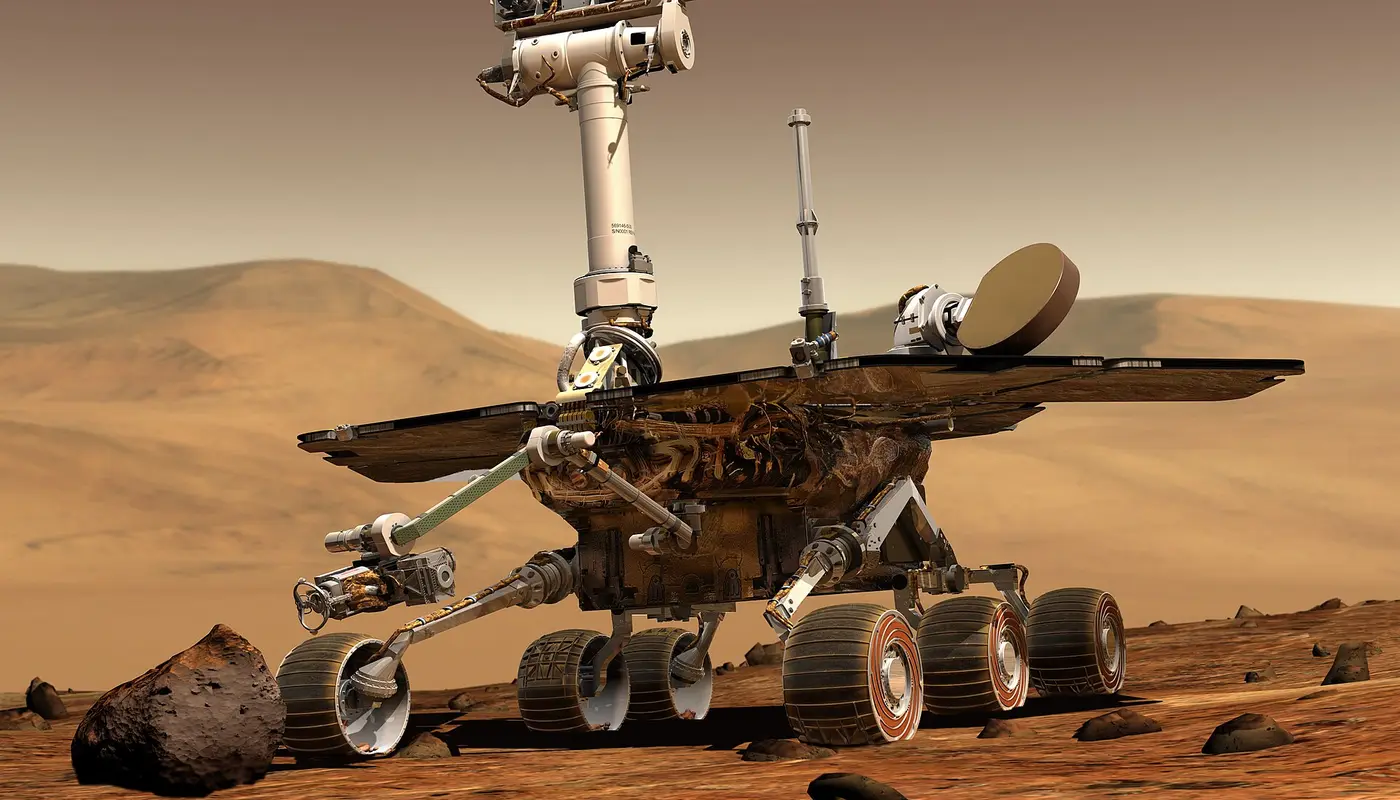
When Perseverance reached the Margin Unit at the edge of Jezero Crater in September 2023, mission scientists expected to find sedimentary rock: fine layers of sand, silt and clay laid down gradually as an ancient lake’s shoreline advanced and retreated. Instead, as Phys.org reports, the rover found rock dominated by carbonate minerals, and new analysis of that material now points to at least three distinct episodes of water on early Mars, not one long wet period.
Sediment versus precipitate
The distinction matters more than it sounds. Sedimentary rock forms from particles — grains of sand, flakes of clay — that settle out of moving water and pile up over time. It’s a physical process, and on Earth it’s prized by astrobiologists because those fine-grained layers can trap and preserve microbial material as it’s buried. Carbonate rock is different: it typically forms as minerals precipitate directly out of water through chemical reactions, often when carbon dioxide dissolved in water combines with calcium or magnesium. Orbiters had already picked up strong carbonate signals in this area, which is what drew Perseverance there in the first place, but finding carbonate as the dominant rock type rather than a component within sediment changes the story of how this shoreline actually behaved.
A precipitate-dominated rock record still preserves history — arguably a very precise one, since carbonate chemistry is sensitive to water temperature, acidity and dissolved gas content at the moment it formed. It just preserves a different kind of history than scientists were prepared for.
Reading three chapters, not one
The reason researchers are now describing three separate water episodes rather than a single lake-filling event comes down to layering and mineral variation within the Margin Unit itself. Different bands of carbonate, formed under different chemical conditions, suggest the water at this shoreline came and went, or changed character, more than once — rather than Jezero simply filling with a stable lake and slowly drying out. That has real consequences for habitability. A single long-lived lake offers one continuous window in which life could have taken hold. Three distinct episodes suggest either repeated arrivals of water separated by dry spells, or a lake environment that kept changing chemically, each phase offering a different, narrower set of conditions.
None of this confirms biosignatures, and the wire report is careful to frame the mineral history rather than any life-detection claim. What it does is sharpen the question Perseverance was sent to answer: not just whether Jezero was wet, but how many separate chances early Mars actually gave for chemistry to turn into biology.
Reported at Phys.org; analysis ours.
Newsletter
Missions & launches, every morning
Get Orbit Report in your inbox. No spam, and one click to leave.
Every morning · Unsubscribe any time. We never sell or rent your address; read the privacy policy.